Biologists have long hypothesized that the forest’s underground mycelial network serves not only for nutrient transport but also for information transmission. Laboratory experiments have confirmed the ability of fungi to exchange electrical signals; however, recording large-scale communication in natural conditions has proven difficult. The concealment of microscopic hyphae underground and the unpredictable growth of fruiting bodies have hindered ecologists from gathering reliable spatial data in the wild.
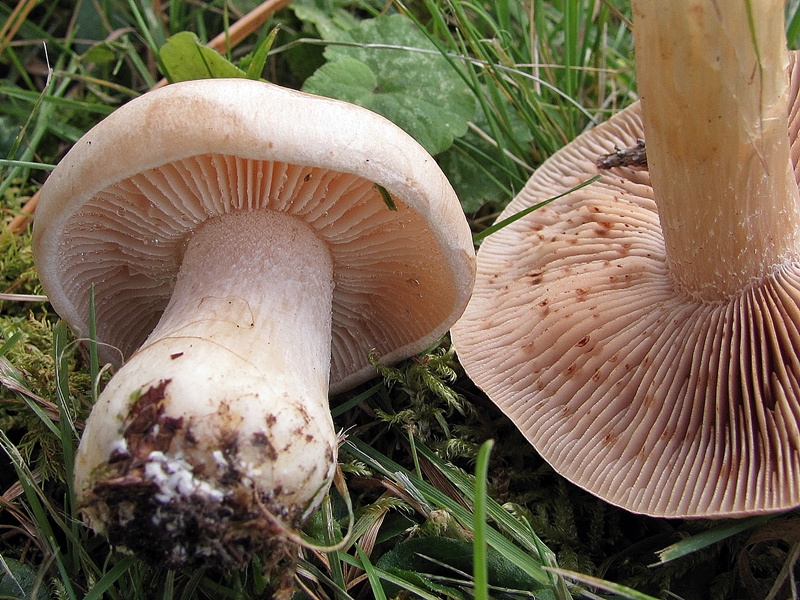
The authors of an article published in the journal Scientific Reports fertilized 25 square meters of oak forest in Japan’s Miyagi Prefecture with urea during the spring. This supplementation triggered a massive autumn growth of “ammonia fungi” of the genus Hebeloma. Biologists inserted thin medical electrodes into the caps and stems of 37 emerging mushrooms and recorded the potential difference every second for three and a half days.
Next, they tested the forest network’s reaction to external stimuli. Scientists poured 200 milliliters of tap water or human urine (collected from one of the study’s authors) specifically under the base of a particular mushroom; in one of the tests, they completely flooded the experimental plot with water. Upon completion of the electrophysiological recordings, the researchers collected all 37 mushrooms and sequenced their DNA to determine species identity and the degree of relatedness. The strength and direction of information flows were analyzed using the mathematical framework of transfer entropy.
Calculations showed that the mushrooms constantly send electrical signals to one another. The intensity of this exchange predictably depends on physical and genetic distance: the closer the mushrooms grow and the higher their degree of kinship, the stronger the informational connection. However, the network is not limited to a single clone. Scientists recorded a steady exchange of signals between genetically different individuals and even between representatives of two different species—Hebeloma danicum and Hebeloma cylindrosporum.
The study’s authors noted that the contribution to communication among different mushrooms was not uniform. One specific mushroom (referred to in the paper as Mushroom No. 1) turned out to be a genuine communication hub. It was the source of the most intense information flows to an entire group of neighboring mushrooms (Nos. 2, 3, 5, and 15). Furthermore, Mushroom No. 1 managed to send the strongest signals to the distantly located Mushroom No. 23, which not only grew apart from the rest but also belonged to a completely different species.
The reaction to stimuli depended strictly on the scale of the impact. When water was poured under only one mushroom, its own electrical potential rose, and over the next 30 minutes, the level of signal exchange between all mushrooms in the plot significantly increased. Conversely, when biologists flooded the entire area at once, information transmission dropped sharply: each mushroom activated independently, and the coordinated network dialogue collapsed due to general “information noise.”
The experiment involving the addition of urine—which Hebeloma prefers as a nitrogen source—did not yield a noticeable effect. Only Mushroom No. 1 showed a significant, albeit small, burst of activity. The authors attributed this to temperature constraints: the experiment took place in an autumn forest at +10 °C. In such cool conditions, soil bacteria require about five days to process urea into the ammonia that interests the fungi. Since the recording cycle lasted only three days, the mushrooms simply did not have enough time to react to the chemical change in the soil composition.
In a natural environment, fungi form dynamic communication networks and react quickly to the local appearance of resources. The exact mechanism of interspecies communication remains unknown: the signal may travel through the intertwined hyphae of different species or via the secretion of chemicals that alter the acidity and electrical balance of neighboring colonies.