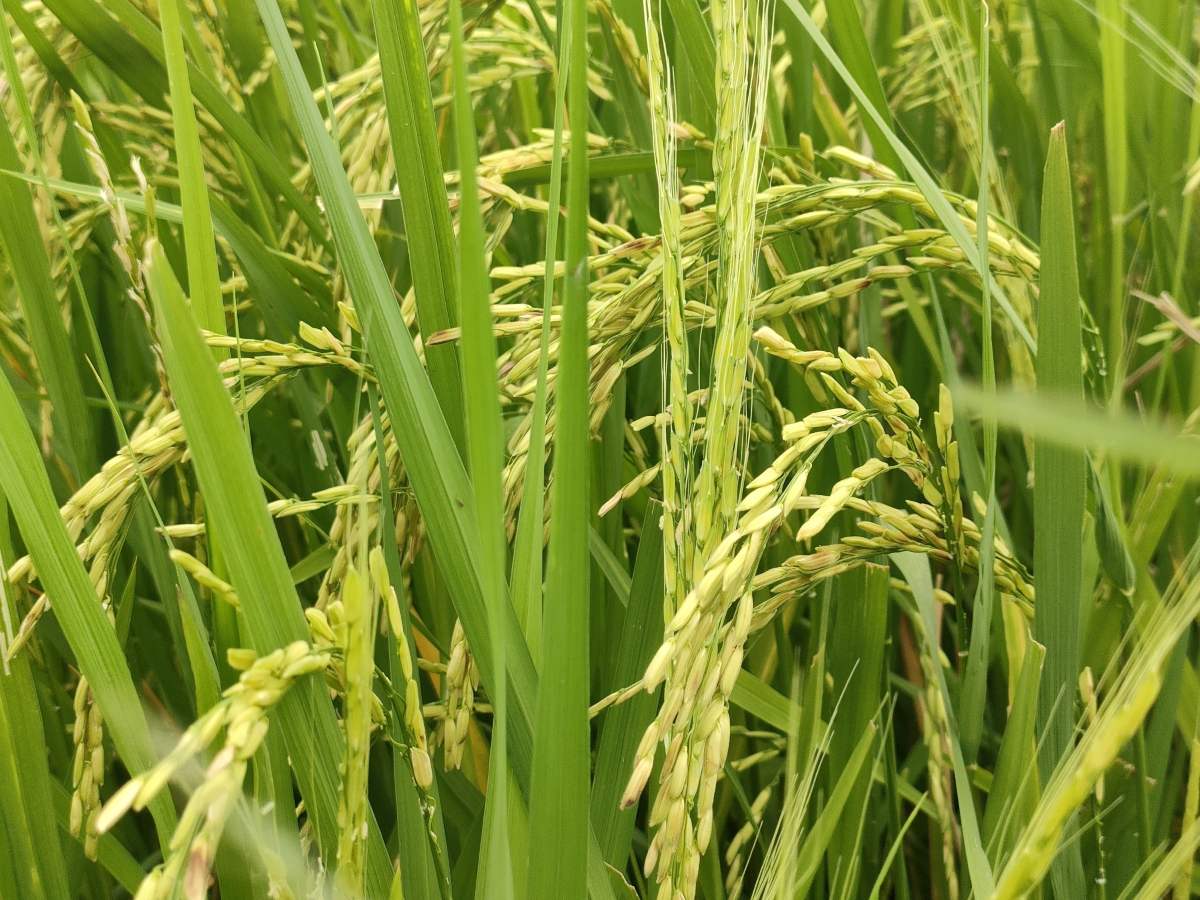
This study investigates whether natural environmental sounds can quantitatively influence plant growth. Previously, such effects had not been rigorously demonstrated, despite assumptions that mechanical and acoustic signals might play a role in the development of living organisms. The authors focus on the sound of rain as one of the most widespread and physically impactful natural sources of acoustic vibrations, capable of penetrating both soil and water.
In the experiment, seeds of Oryza sativa were used. They were placed either in soil or in a shallow layer of water. The researchers simulated rainfall conditions by generating controlled falling droplets, which allowed them to precisely regulate the intensity and frequency of the resulting sound waves. They then measured the rate of seed germination and its dependence on acoustic parameters.
The results showed that the sound of falling droplets produces significant pressure fluctuations and mechanical vibrations in the surrounding medium. These vibrations are transmitted into the seed and can affect its internal structures. Particular attention is given to statoliths, microscopic particles involved in gravity sensing. Under the influence of acoustic vibrations, these particles shift, triggering cellular signaling pathways associated with gravitropism, that is, the directional growth of a plant in response to gravity.
Thus, the sound of rain acts not merely as a byproduct of precipitation but as an active physical signal capable of accelerating the initiation of germination processes. It was demonstrated that, in the presence of such acoustic stimulation, seeds germinate faster than in its absence. However, this effect is observed primarily at shallow depths, where the intensity of sound vibrations remains sufficient to influence the seed.
The authors interpret these findings as a possible adaptive mechanism. If a seed perceives the characteristic sounds of rain, this may indicate that it is located near the soil surface, where moisture is present and access to light will be available after germination. In deeper soil layers, sound signals weaken, reducing the likelihood of premature germination and thereby potentially increasing plant survival.
More broadly, the study suggests that plants may be sensitive to various forms of mechanical and acoustic stimuli in their environment. This opens new avenues for research into the role of sound in biological processes, as well as potential applications in agriculture, where acoustic stimulation could be used to regulate plant growth.
Overall, the work provides one of the first quantitative demonstrations that natural sounds, such as rain, can serve as a meaningful factor influencing the early stages of plant development, complementing traditionally studied variables such as moisture, temperature, and light.