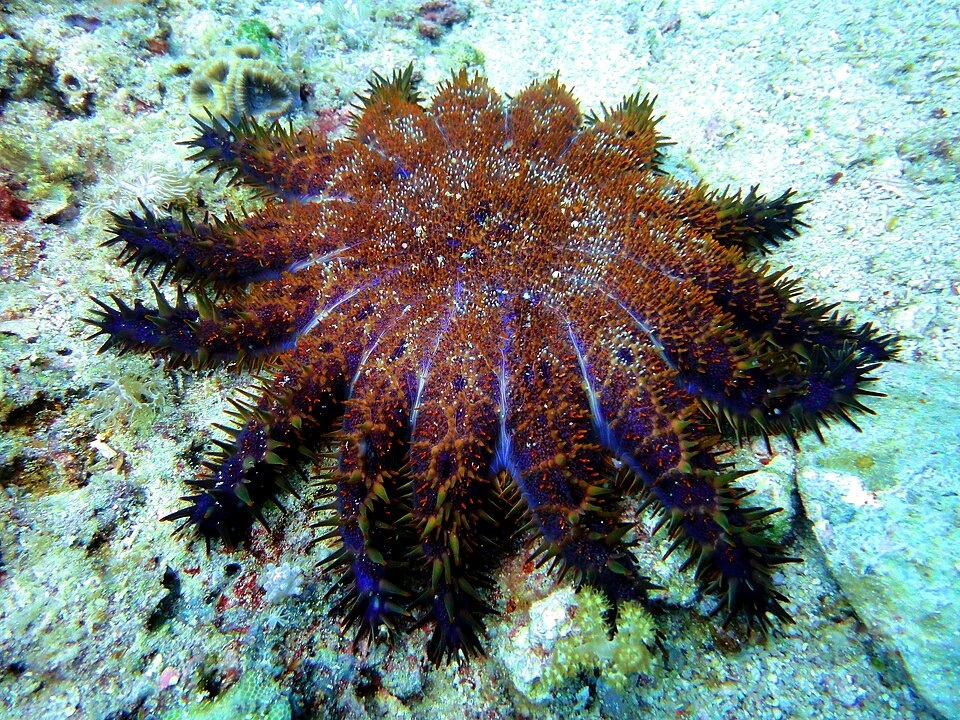
Crown-of-thorns starfish are widely known for consuming corals, but new research suggests their effects on the Great Barrier Reef may be more complicated than simple destruction.
Researchers observing feeding events found that nearly 75% left living coral tissue behind, rather than completely eliminating the colonies they attacked. The finding indicates that a feeding event does not necessarily mean the total loss of a coral colony.
The starfish may also influence which corals dominate a reef. According to the research, they feed on fast-growing coral species that can otherwise become dominant. Removing some of that living coral could leave space or resources for slower-growing species, potentially supporting greater variety among corals.
A predator with two possible effects
Crown-of-thorns starfish are often treated as a major threat because large population outbreaks can consume substantial areas of coral. That concern remains important. However, the observations suggest that their role at lower or controlled population levels may differ from their effect during an outbreak.
The study shows an association between starfish feeding and the survival of coral tissue, as well as a possible link between feeding and opportunities for less competitive coral species. It does not, on its own, establish that starfish increase reef biodiversity over the long term. That would require further research tracking coral communities through time and comparing reefs with different starfish densities.
The result adds nuance to reef management. A species capable of causing severe coral loss when abundant might also contribute to a more varied coral community when present in smaller numbers. Understanding that balance could help scientists distinguish between harmful population explosions and the ecological effects of ordinary predation.
For the Great Barrier Reef, the message is not that crown-of-thorns starfish are harmless. Rather, their impact may depend strongly on abundance, the coral species they consume and what grows afterward.
Source: Original report.